Tile Roof Replacement in Hesperia from $6,000. Tile handles this climate well. The felt underneath it does not. Free inspection and a written quote.
Tile is the right covering for this climate and the felt under it is the wrong one. Concrete does not care about ultraviolet and is heavy enough that wind rarely troubles it; standard felt in an attic that runs well over a hundred degrees for months does not last its rating. Specify a high-temperature underlayment on the relay, or you buy the same interval again.
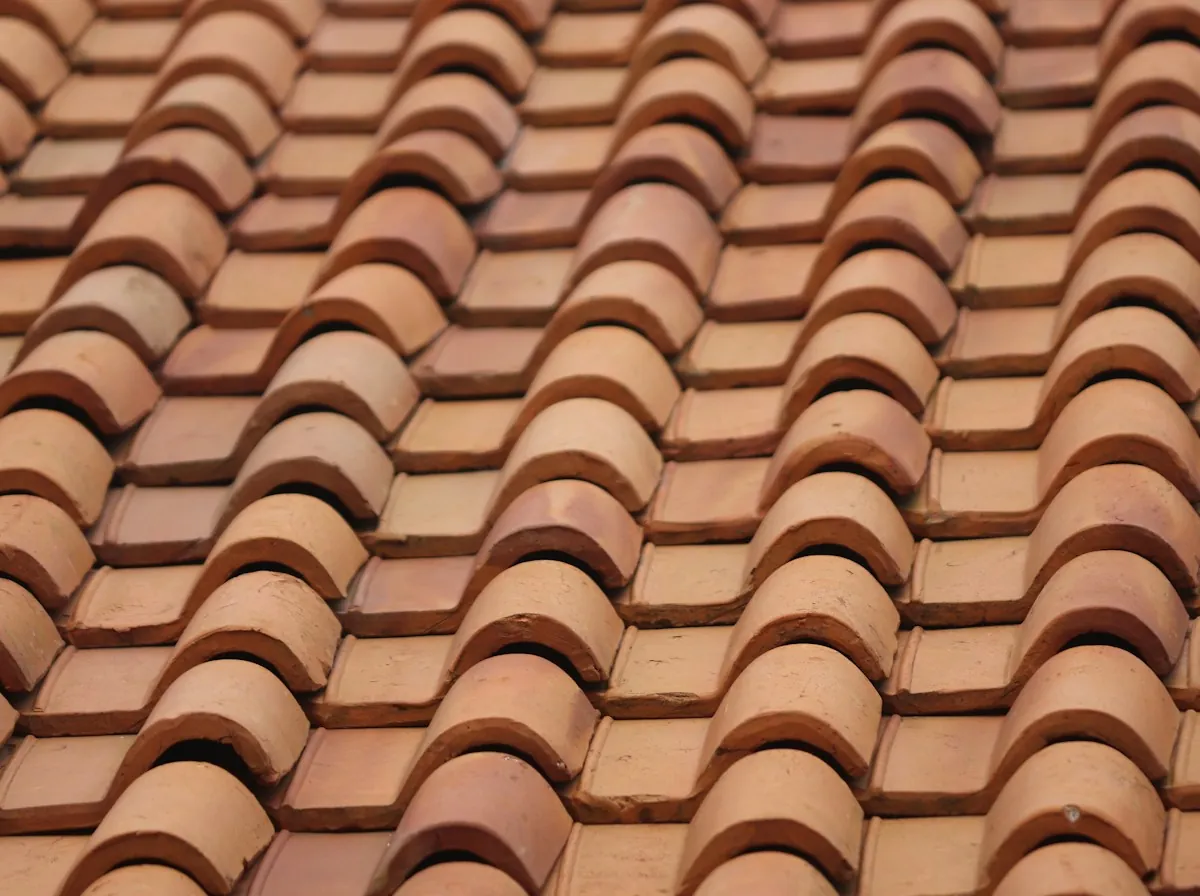
Concrete tile is a genuinely good choice in the High Desert. It does not care about ultraviolet the way asphalt does, it holds its shape through the daily thermal cycle, and it is heavy enough that wind uplift is rarely the problem it is on a lighter covering.


A lift and relay -- your own tile back down over new underlayment -- runs $6,000 to $16,000 here against $22,000 to $45,000 for a full replacement. Specify a high-temperature underlayment when you do it: standard felt is what failed, and putting the same thing back buys you the same interval again. Two lines matter more on a Hesperia quote than the shingle brand. The fastening pattern, because a four-nail minimum does not survive the wind here. And whether your attic already meets R-20, which exempts you from the cool-roof requirement entirely.
If the tile is sound and only the felt beneath has failed, the relay is the right job at roughly a third of the cost. We count the salvageable tile before quoting either.
Concrete does not care about ultraviolet the way asphalt does, holds its shape through the daily cycle, and is heavy enough that wind uplift is rarely the problem. It is the covering this climate argues for.
A relay quoted with standard felt. In an attic that runs well over a hundred degrees for months, that is the component that just failed -- and reusing the same spec is why some roofs get relaid twice in twenty years.
Zone 14 is the hardest climate any site in this network covers, and it works on a covering mechanically rather than chemically: a forty-degree daily swing cycles asphalt until the mat gives up, and wind finds anything not fastened for it. Tile handles it far better than composition does -- but the felt under the tile does not.
Hesperia is Title 24 climate zone 14, which puts the steep-slope cool-roof requirement in play on any re-roof covering half the roof or more.
The underlayment beneath it is a different story. Felt in an attic that reaches well over a hundred degrees for months at a time ages far faster than its rating implies, so the usual High Desert tile failure is a sound tile field sitting on felt that has gone brittle and torn. That is why these roofs leak with nothing visibly broken.
This is a replacement company saying so. In the High Desert the expensive mistake is buying a new covering when the problem was the felt, the fastening or the ventilation.
Concrete tile handles this climate well. Standard felt in a hundred-degree attic does not. A tile roof quoted at $22,000 to $45,000 is very often a $6,000 to $16,000 relay -- with a high-temperature underlayment this time.
What lets go out here is usually a fixing or a lap that the wind has worked on for a season, and putting it right is a few hundred dollars. It is also the commonest opening for a replacement pitch, which is a different conversation entirely.
And roofs do finish out here, all at once, after enough seasons of wind and sun. When that is the answer we will give it -- and show you the slope it is based on.
A Hesperia replacement is decided by two things a valley quote never mentions: how it is fastened, and what the energy code wants.
Zone 14 puts this in play on any re-roof covering half the roof or more: aged solar reflectance 0.20 and thermal emittance 0.75, or SRI 16.
Composition has the shortest life of any covering in zone 14, and the reason is mechanical rather than thermal: a forty-degree daily swing works the mat until it cannot recover.
Low slope carries the strictest cool-roof requirement in the state -- aged SRI 75, in all sixteen zones with no exemption -- which is a far higher bar than the 16 that applies to your pitched roof.
High Desert roofs fail unevenly, which makes partial genuinely worth costing here.
Building since 1971. Dust, wells and wide lots.
Civic Plaza and Main Street. Commercial low slope.
Unincorporated. Newer houses, busier geometry.
The pass. The most exposed ground on this site.
Higher, colder, and more than one roof per parcel.
Its own city, and a lot of multi-family.
A Town, not a city. Barns as often as houses.
Asked on every job of this kind. Answered here.
Because the leak is under it. Concrete tile outlasts the felt beneath it by decades anywhere, and an attic that runs well over a hundred degrees for months widens that gap. The felt tears and goes brittle while the tile above still looks new from the road.
A high-temperature product, not standard felt. Standard felt is what just failed, and specifying it again buys you the same interval a second time. This is the single most important line on a High Desert relay quote and it is frequently missing.
Typically $7,500 to $18,000. High Desert labor runs below the Los Angeles basin, though travel is longer, so an LA average reads high here and a national average reads low. Composition is about $5.50 to $8.50 per square foot; tile considerably more, unless a relay is possible.
Because the warranty was written for an average American climate and this is not one. Hesperia sees a daily swing that can run forty degrees between afternoon and dawn, all year. Asphalt expands and contracts through that cycle until the mat cannot recover, which is why you see curling and granule loss early here.
Probably yes. Hesperia is Title 24 climate zone 14, and the steep-slope cool-roof requirement applies in zones 10 through 15 -- so your pitched roof is in scope once you replace 50% or more of it. The minimum is aged solar reflectance 0.20 and thermal emittance 0.75, or SRI 16.
Free inspection, and a written quote against a written scope. Fastening pattern specified for wind, not left to the minimum.