Partial Roof Replacement in Oak Hills from $300. Below 50% the cool-roof rule does not bite. Above it, the whole roof complies. Free inspection and a written quote.
Complex newer geometry gives you real partial boundaries: separate roof planes over a garage wing or a projecting bedroom that can be done independently. On a simpler older roof there is often no natural line to stop at, and a partial has to be invented rather than found.
The 50% line decides whether your pitched roof has to meet the cool-roof requirement at all. Under it, you are repairing a section. Over it, the whole roof complies. In zone 14 that is worth real money, so a partial is worth costing rather than dismissing.


A partial sits between a repair, which is $300 to $1,200 here, and a full replacement at $7,500 to $18,000. High Desert roofs fail unevenly -- the south and west slopes go years before the north one -- so replacing what has failed and leaving what has not is often the honest answer rather than a compromise. Newer and busier. More hips, valleys and changes of pitch mean more detailing per square foot than the older stock -- and the permit is San Bernardino County rather than the City of Hesperia, which is a different fee schedule.
Under 50% of the roof area, the steep-slope cool-roof requirement does not apply. Over it, the whole roof complies. That is measured, not estimated.
Travel. Mobilization costs more in the High Desert than in town, so two partials can genuinely cost more than one replacement -- especially on a parcel with several structures.
A workshop or a barn is its own building with its own 50% test, so phasing across structures does not combine. Phasing across slopes on one roof does.
The permit is the first thing to get right: Oak Hills is unincorporated, so a re-roof goes through San Bernardino County rather than the City of Hesperia. The roofs themselves are newer and busier -- more hips, valleys and changes of pitch than the older stock -- which means more detailing per square foot rather than simply more area.
Oak Hills is unincorporated San Bernardino County, so its building permits come from the county rather than from the City of Hesperia.
This is a replacement company saying so. In the High Desert the expensive mistake is buying a new covering when the problem was the felt, the fastening or the ventilation.
If the complaint is an unbearable upstairs rather than a leak, attic ventilation and insulation will do more than any covering -- and R-20 insulation happens to exempt you from the cool-roof requirement as well.
What lets go out here is usually a fixing or a lap that the wind has worked on for a season, and putting it right is a few hundred dollars. It is also the commonest opening for a replacement pitch, which is a different conversation entirely.
And roofs do finish out here, all at once, after enough seasons of wind and sun. When that is the answer we will give it -- and show you the slope it is based on.
Oak Hills is unincorporated, so the permit goes to San Bernardino County rather than the City of Hesperia -- a different application and a different inspector, and filing in the wrong place costs a week.
Newer Oak Hills houses are the likeliest around here to be exempt already, and almost nobody checks.
Tile on the newer Oak Hills houses is generally on synthetic underlayment rather than felt, and synthetic does not embrittle on the felt timetable even at these attic temperatures.
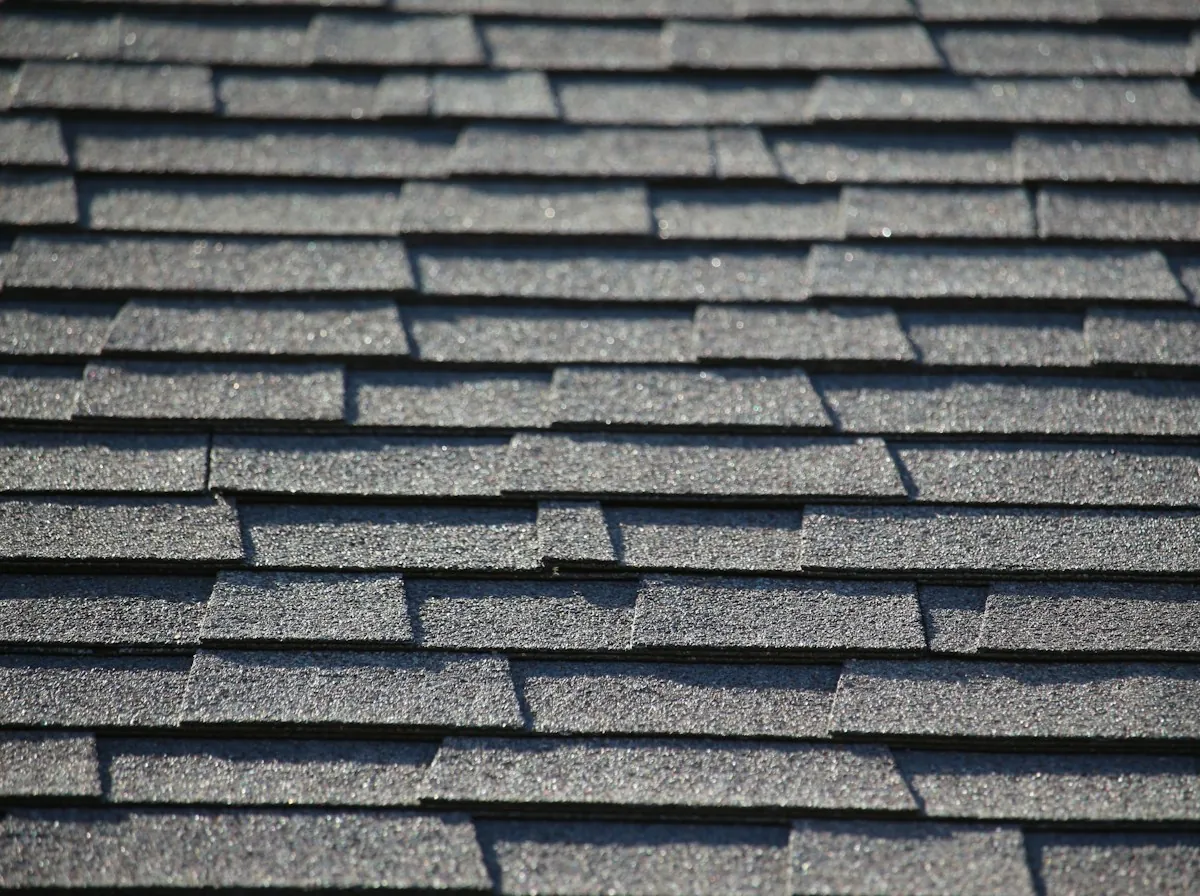
Architectural shingle on newer Oak Hills houses has a far better seal line than the three-tab it replaced, so wind failures are localized rather than across a slope.
On newer Oak Hills houses the low slope is usually a small section -- a porch, a link between wings -- and on its own it stays under the 50% trigger.
Zone 14. Wind and a forty-degree daily swing.
Building since 1971. Dust, wells and wide lots.
Civic Plaza and Main Street. Commercial low slope.
The pass. The most exposed ground on this site.
Higher, colder, and more than one roof per parcel.
Its own city, and a lot of multi-family.
A Town, not a city. Barns as often as houses.
Asked on every job of this kind. Answered here.
Completely, and it is the usual High Desert pattern. The south and west slopes take the ultraviolet and the afternoon heat; the north slope on the same house can be years behind. Replacing what has gone and leaving what has not is often correct rather than a compromise.
It can, because the steep-slope cool-roof requirement only applies once you replace half the roof or more. Under that line the product question does not arise. Worth measuring properly -- and worth weighing against travel, because two visits out here cost more than two visits in town.
Probably yes. Hesperia is Title 24 climate zone 14, and the steep-slope cool-roof requirement applies in zones 10 through 15 -- so your pitched roof is in scope once you replace 50% or more of it. The minimum is aged solar reflectance 0.20 and thermal emittance 0.75, or SRI 16.
Four documented exceptions: an addition under 300 square feet of roofing, an attic radiant barrier, R-20 or better attic insulation, or properly sealed ducts. Out here the insulation route is usually the better buy anyway -- it cuts the cooling load rather than reflecting a fraction of it, on a house that runs air conditioning five months a year.
It depends on the address. Hesperia and Victorville are cities, Apple Valley is an incorporated Town, and Oak Hills, Summit Valley and Phelan are unincorporated San Bernardino County. We pull it either way, but a contractor who files in the wrong place costs you a week.
Free inspection, and a written quote against a written scope. Fastening pattern specified for wind, not left to the minimum.